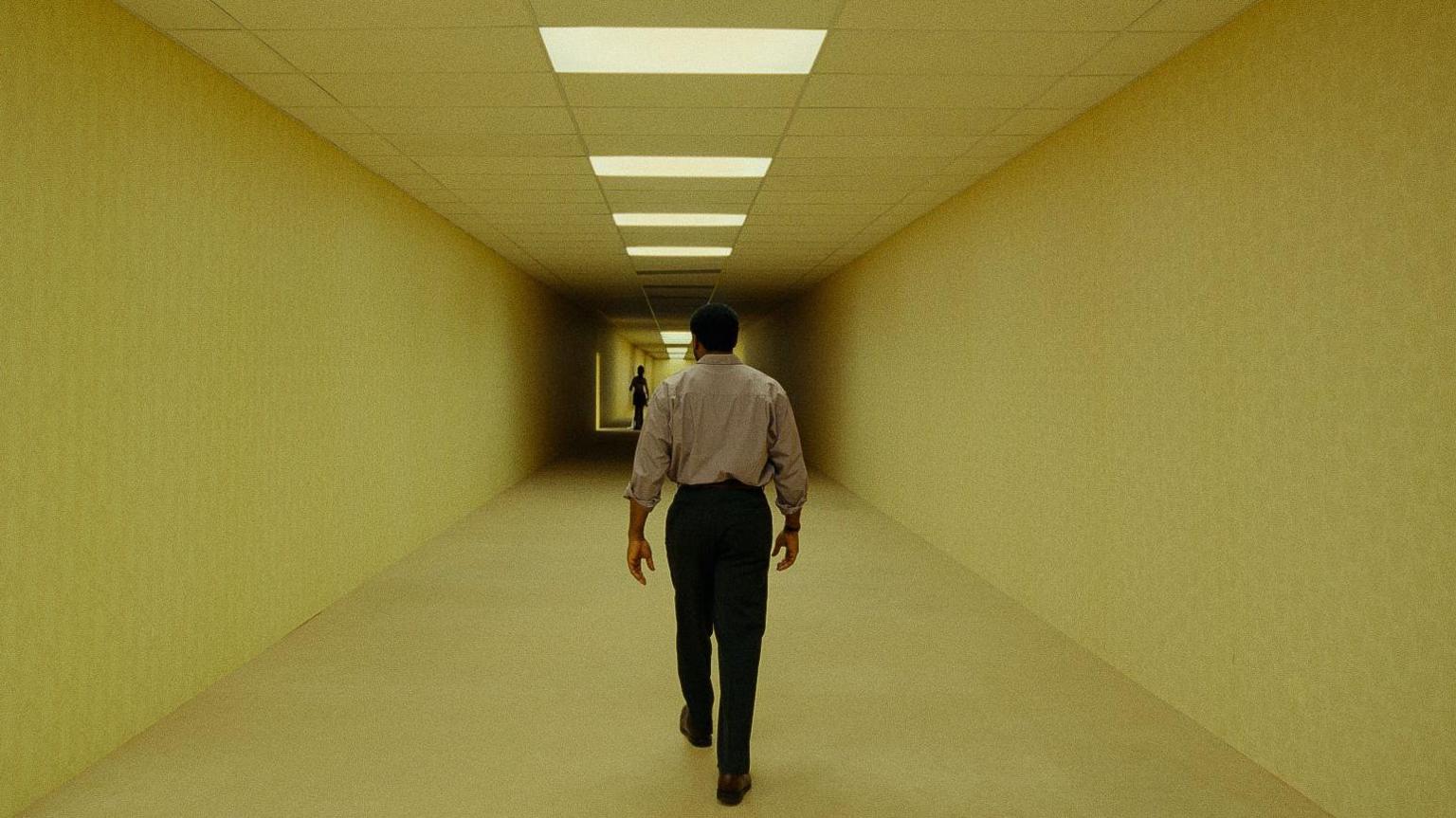
The scariest thing about The Backrooms, for me, is the found footage scenes. And I think this is also what helped fuel the internet fandom around liminal spaces.
In that sense, The Backrooms feels like the Blair Witch Project of a younger generation.
When I watched The Blair Witch Project as a kid, more than the story itself, more than the idea of a witch haunting a group of friends in the woods, it was the found footage of terrified young people that gave me chills.
Another scene I remember vividly is from M. Night Shyamalan’s Signs. I did not even like the movie that much, but that image of an alien filmed at a child’s birthday party, the shaky camera, the screams in the background, and the blurry glimpse of the alien, was one of the scariest things I had ever seen.
That is the thrill of found footage.
Videos filmed with handheld cameras already create uneasiness, because you are never fully sure what you are supposed to see. The image is shaky, glitchy, unstable. It feels like the footage could disappear at any moment.
And when you add the fear of not knowing what you will see next, it becomes incredible horror material.
Because it is often scarier not to see what we are afraid of fully. The missing image keeps feeding our imagination and the fears we carry deep down.
But the difference with The Backrooms is that its horror does not come from aliens or witches.
It comes from footage of liminal spaces we already know: malls, offices, hospitals, corridors, empty rooms. And because the story is so open-ended, because we do not know where these spaces are exactly, and because they seem connected to memory and trauma, The Backrooms becomes more psychological than supernatural.
And the interesting thing is how connected it feels to the COVID era.
The image of empty spaces that are not supposed to be empty was intensified by the isolation of the pandemic. We began to associate emptiness with fear, death, losing someone, loneliness, and the eerie feeling of the unknown.
That is why The Backrooms feels so culturally powerful. It shows how the collective memory of one dark period in human history can lead to new ways of storytelling.
And that is terrifying, but also exciting.
